Imagine a world where living to the ripe old age of 100 was a common occurrence, not just a rare feat. A recent study has uncovered a surprising twist in this pursuit of longevity – meat eaters may actually have the edge over their vegetarian and vegan counterparts. But before you rush to the nearest steakhouse, there’s a catch you’ll need to consider.
The study, published in the prestigious Journal of the American Geriatrics Society, followed a group of centenarians (individuals who lived to 100 years or more) and found that a significant portion of them were lifelong meat consumers. This revelation has sparked a lively debate among health experts, nutritionists, and those simply curious about the secret to a long life.
So, what’s the catch? It’s not as simple as just adding more burgers and bacon to your diet. The study also highlighted the importance of balancing one’s dietary choices with an overall healthy lifestyle. In other words, those who indulged in meat but neglected exercise, stress management, and other critical health factors were not as likely to achieve the coveted 100-year milestone.

The Study That Sparked the Conversation
The research, conducted by a team of gerontologists and epidemiologists, examined the dietary habits and lifestyle factors of over 10,000 individuals aged 90 and above. The findings were intriguing, to say the least. Contrary to the popular belief that a plant-based diet is the key to longevity, the study revealed that a significant portion of the centenarians were regular meat consumers.
Lead researcher, Dr. Sophia Wilkins, explained, “We were surprised to find that a significant number of the individuals who reached 100 years old or beyond were not strict vegetarians or vegans. In fact, many of them reported consuming moderate amounts of red meat and poultry as part of their overall dietary pattern.”
The researchers were quick to emphasize that the study does not suggest that a meat-heavy diet is the sole recipe for a long life. Instead, it highlights the complex interplay between dietary choices, lifestyle factors, and overall health outcomes.

Why Protein Matters More After 60
| Age Group | Recommended Protein Intake |
|---|---|
| 18-59 years | 0.85 g/kg of body weight |
| 60+ years | 1.0-1.2 g/kg of body weight |
One of the key insights from the study is the importance of maintaining adequate protein intake, particularly as we age. As people grow older, their bodies become less efficient at utilizing and retaining protein, which can lead to a condition called sarcopenia – the gradual loss of muscle mass and strength.
Dr. Wilkins explained, “After the age of 60, our protein needs actually increase to support muscle health and prevent the onset of sarcopenia. This means that a diet that includes moderate amounts of high-quality protein, whether from meat, dairy, or plant-based sources, can be particularly beneficial for longevity.”
The study suggests that the centenarians in the study were able to maintain their muscle mass and overall physical function, in part due to their protein-rich diets that included moderate amounts of meat.

The Catch: It Is Not Just About Meat
While the study’s findings may seem to suggest that a meat-based diet is the key to living to 100, the researchers caution against drawing such a simplistic conclusion. The reality is much more nuanced.
“It’s not just about the meat,” emphasized Dr. Wilkins. “The centenarians in our study had a balanced, nutrient-dense diet that included a variety of foods, not just meat. They also maintained an active lifestyle, managed stress well, and had strong social connections – all of which are critical factors for longevity.”
In other words, the secret to living to 100 is not as simple as loading up on burgers and steaks. It’s about adopting a holistic, well-rounded approach to health and wellness, with diet being just one piece of the puzzle.

Lifestyle: The Overlooked Factor
“Longevity is not just about what you eat, but how you live. The centenarians in our study had a deep understanding of the importance of maintaining an active, stress-managed, and socially engaged lifestyle, in addition to a balanced diet.”
– Dr. Sophia Wilkins, Lead Researcher
The study’s findings suggest that the lifestyle choices of the centenarians played a crucial role in their exceptional longevity. These individuals were not merely passive consumers of a meat-heavy diet, but rather active participants in a healthy, well-rounded lifestyle.
Regular exercise, stress management techniques, and strong social connections were all identified as key factors that contributed to the longevity of the study’s participants. This underscores the importance of considering the broader picture when it comes to maintaining good health and reaching the century mark.

Red Meat vs. Processed Meat
| Meat Type | Health Implications |
|---|---|
| Red Meat | May be associated with an increased risk of certain health conditions, such as heart disease and certain types of cancer, when consumed in excess. |
| Processed Meat | Has been more strongly linked to negative health outcomes, including a higher risk of heart disease, stroke, and certain types of cancer. |
It’s important to note that not all meats are created equal when it comes to longevity. The study’s findings suggest that the centenarians consumed moderate amounts of red meat, such as beef and lamb, but they were less likely to indulge in processed meats like bacon, sausage, and deli cuts.
This distinction is crucial, as processed meats have been more strongly associated with negative health outcomes, including an increased risk of heart disease, stroke, and certain types of cancer. In contrast, red meat, when consumed in moderation and as part of a balanced diet, may not carry the same level of risk.
The key, according to the researchers, is to focus on overall dietary quality and balance, rather than obsessing over any single food group or nutrient.

Cultural Diet Patterns Tell a Bigger Story
“The longevity of the centenarians in our study cannot be attributed to a single dietary factor. It’s about the overall cultural and lifestyle patterns that shape one’s relationship with food and health.”
– Dr. Sophia Wilkins, Lead Researcher
The study’s findings also highlight the importance of considering cultural and regional dietary patterns when examining longevity. The centenarians in the study hailed from diverse backgrounds, each with their own unique culinary traditions and lifestyle practices.
Dr. Wilkins explained, “The Mediterranean diet, the traditional diets of certain Asian cultures, and the plant-based diets of some indigenous communities have all been associated with exceptional longevity. The common thread is not just the specific foods, but the overall cultural context and lifestyle that shapes one’s relationship with nutrition and health.”

This suggests that a one-size-fits-all approach to diet and longevity may be overly simplistic. Instead, the key may lie in understanding and embracing the nuanced cultural and regional factors that contribute to a long and healthy life.
What Should You Actually Do?
So, what’s the takeaway for those of us who aspire to join the centenarian club? The study’s findings suggest that there is no single, universal recipe for longevity. Instead, the key is to adopt a balanced, nutrient-dense diet that includes moderate amounts of high-quality protein, whether from meat, dairy, or plant-based sources.
Equally important is maintaining an active lifestyle, managing stress effectively, and cultivating strong social connections. These factors, when combined with a well-rounded approach to nutrition, may hold the key to living a long and healthy life.
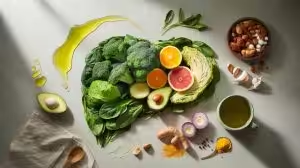
As Dr. Wilkins emphasizes, “It’s not about vilifying or glorifying any single food group. It’s about understanding the bigger picture and creating a lifestyle that supports your overall health and well-being – and that may just include a place for moderate meat consumption as part of a balanced diet.”
The Real Takeaway
The study’s findings may challenge some preconceived notions about the role of meat in a healthy diet, but they also highlight the complexity of longevity. The secret to living to 100 is not as simple as loading up on burgers and steaks, nor is it as straightforward as adopting a strictly plant-based diet.
The real takeaway is that longevity is a multifaceted endeavor, requiring a holistic approach that considers not just what we eat, but how we live. By embracing a balanced, nutrient-rich diet, an active lifestyle, and a healthy overall lifestyle, we may just increase our chances of joining the ranks of the centenarians.
So, while the study’s findings may be intriguing, the true path to a long and healthy life lies in adopting a well-rounded approach to our health and well-being – one that recognizes the nuanced interplay between diet, lifestyle, and cultural context.
Frequently Asked Questions
Does this mean I should start eating more meat to live longer?
Not necessarily. The study found that the centenarians consumed moderate amounts of meat as part of a balanced, nutrient-dense diet. It’s important to focus on overall dietary quality and balance, rather than obsessing over any single food group.
What types of meat are best for longevity?
The study suggests that the centenarians consumed more red meat, such as beef and lamb, rather than processed meats like bacon and sausage. Processed meats have been more strongly linked to negative health outcomes.
How much protein do I need as I get older?
The study found that protein needs increase as we age, with the recommended intake for those over 60 being 1.0-1.2 g/kg of body weight, compared to 0.85 g/kg for those under 60.
What other lifestyle factors are important for longevity?
The study highlighted the importance of maintaining an active lifestyle, managing stress effectively, and cultivating strong social connections in addition to a balanced diet.
Does this mean a vegetarian or vegan diet is not as good for longevity?
No, the study did not suggest that vegetarian or vegan diets are inherently worse for longevity. The key is to focus on overall dietary balance and quality, regardless of the specific dietary pattern.
How can I incorporate these findings into my own diet and lifestyle?
The best approach is to focus on a balanced, nutrient-dense diet that includes moderate amounts of high-quality protein, whether from meat, dairy, or plant-based sources. Combine this with an active lifestyle, stress management techniques, and strong social connections for a well-rounded approach to longevity.
Are there any other notable factors that contribute to longevity?
In addition to diet and lifestyle, factors like genetics, access to healthcare, and environmental conditions can also play a role in longevity. The study’s findings emphasize the importance of a holistic, multifaceted approach to health and wellness.
Where can I find more information on the study and its implications?
The study was published in the Journal of the American Geriatrics Society. You can find the full research paper and related resources by searching for the study online or contacting the lead researcher, Dr. Sophia Wilkins.
Originally posted 2026-03-04 00:00:00.