As the cold winds sweep across Europe, Germany is bracing for a winter blast that’s set to bring snow down to the lowlands within the next few days. After weeks of a sleepy high-pressure system, the weather patterns are shifting, ushering in a brisk west-to-north regime that promises to deliver bands of rain and a gradual drop in snow lines.
Meteorologists are closely monitoring the situation, drawing comparisons to the winter of 2010 – a year that saw significant snowfall blanketing much of the region. However, this year’s forecast comes with a fair share of uncertainty, as the weather systems involved are still evolving and the potential impact remains difficult to predict with complete certainty.
Nonetheless, residents and travelers in Germany are being advised to prepare for the impending winter conditions, which could disrupt daily life and transportation in the coming days.

Shifting Weather Patterns Across Central Europe
The change in weather patterns across central Europe has been swift and dramatic. What was once a dominant high-pressure system has now given way to a more dynamic, west-to-north regime, bringing with it the promise of increased precipitation and a gradual lowering of the snow line.
Meteorologists are closely monitoring the development of this new weather pattern, which is expected to bring bands of rain and snow to the region. As the cold air mass moves in, the snow line is projected to drop, potentially reaching the lowland areas of Germany within the next few days.
This shift in weather dynamics is a significant departure from the relatively calm and uneventful conditions that have prevailed in recent weeks. Residents and travelers in Germany are being advised to stay tuned to weather updates and prepare for the potential disruptions that the incoming winter blast may bring.

Lessons from the Winter of 2010
The winter of 2010 is a tempting comparison for meteorologists and weather enthusiasts, as it was a year that saw significant snowfall blanketing much of central Europe, including Germany. However, experts caution that drawing too many parallels between the current situation and the events of 2010 may be a shaky proposition.
While there are certainly some similarities in the broad weather patterns, the specific dynamics and factors at play this year may differ significantly. Meteorologists are quick to point out that each winter season is unique, with its own set of variables and potential surprises.
Nevertheless, the 2010 winter serves as a valuable reference point, offering insights into the potential challenges and impacts that the coming days may bring. Authorities and residents alike are closely monitoring the situation, ready to adapt to the evolving weather conditions.
What to Expect on the Ground
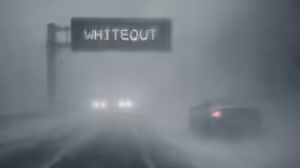
As the snow lines edge downward, the impact on daily life and transportation in Germany is likely to be significant. Residents can expect to see increased snowfall in the lowland areas, potentially disrupting commutes, school schedules, and other routine activities.
Authorities are already taking steps to prepare for the winter blast, mobilizing snow removal equipment and salt supplies to keep roads and public spaces clear. Travelers, both within Germany and those planning to visit, are advised to stay informed about the latest weather updates and plan their journeys accordingly.
While the full extent of the snowfall and its consequences remain to be seen, experts are cautioning Germans to be prepared for the possibility of disruptions to their daily routines in the coming days.
The Signals Behind the Scenes
Behind the scenes, meteorologists are closely analyzing the various signals and data points that are informing their forecasts for the incoming winter blast. From satellite imagery to computer models, they are piecing together a comprehensive picture of the weather systems at play.
One key factor they are monitoring is the strength and direction of the prevailing winds, which will play a crucial role in determining the distribution and intensity of the snowfall. Additionally, they are keeping a close eye on the temperature patterns, as the balance between cold air masses and warmer air could ultimately dictate the snow line’s precise location.
By carefully studying these signals and working in collaboration with forecasting agencies across Europe, meteorologists in Germany are striving to provide the most accurate and up-to-date information to the public, allowing them to make informed decisions and prepare accordingly.
Practical Notes for Travel and Daily Life
As the winter blast approaches, it’s important for both residents and travelers in Germany to be aware of the practical considerations and potential disruptions they may face.
Commuters should be prepared for potential delays or closures of public transportation, as well as the need to clear snow and ice from their vehicles before setting out. Authorities are urging people to exercise caution on the roads and to equip their cars with appropriate winter tires and emergency supplies.
For those planning to travel within or to Germany, it’s crucial to stay informed about the latest weather updates and to be flexible with their plans. Airlines, train operators, and other transportation providers may be forced to adjust schedules or cancel services due to the inclement weather conditions.

Prospects for a White Christmas
With the snow lines edging downward and the winter blast on the horizon, the prospects for a white Christmas in Germany are looking increasingly promising. While it’s still too early to make definitive predictions, meteorologists are cautiously optimistic that the coming days could set the stage for a picturesque winter wonderland.
However, as with any weather forecast, there are still a number of variables and uncertainties that could influence the final outcome. Residents and travelers alike are advised to keep a close eye on the latest updates and to be prepared for the potential disruptions that the winter weather may bring.
Nonetheless, the prospect of a white Christmas in Germany is undoubtedly exciting, and many are eagerly awaiting the arrival of the first snowflakes to blanket the landscape and usher in the holiday season.

Insights and Observations
The weather is a fickle beast, and the shifting patterns across central Europe serve as a reminder of the unpredictable nature of our climate. Just when we think we’ve got it figured out, Mother Nature has a way of surprising us.
As the snow lines edge downward, it’s a stark contrast to the sleepy high-pressure system that has dominated the region in recent weeks. This sudden shift in weather dynamics is a testament to the ever-changing nature of our environment and the importance of staying vigilant and prepared.
In the face of these winter challenges, it’s heartening to see the coordinated efforts of meteorologists, authorities, and the public to ensure the well-being and safety of all. It’s a reminder that we’re all in this together, and that by working collaboratively, we can better navigate the ups and downs of the seasons.
| Snowfall Comparison: 2010 vs. Current Forecast | 2010 | Current Forecast |
|---|---|---|
| Total Snowfall Depth | Up to 1 meter (3.3 feet) | Expected to be lower, but still significant |
| Affected Regions | Widespread across central Europe, including Germany | Likely to be focused on the lowland areas of Germany |
| Disruption to Daily Life | Severe, with transportation, power, and infrastructure issues | Expected to be disruptive, but the extent is still uncertain |
“The shift in weather patterns is a significant departure from the calm conditions we’ve seen in recent weeks. While we can’t say for certain how this will play out, we’re advising residents and travelers to be prepared for the possibility of disruptions to their daily routines.”
– Dr. Sabine Hoffmann, Meteorologist at the German Weather Service
“The winter of 2010 was a remarkable year, but we can’t simply assume that this year’s forecast will mirror that event. Each winter is unique, with its own set of variables and potential surprises. We’re closely monitoring the situation and will continue to provide the public with the most accurate and up-to-date information.”
– Dr. Markus Weber, Head of Weather Analysis at the European Centre for Medium-Range Weather Forecasts
“While the prospect of a white Christmas is exciting, we need to remember that safety should be the top priority. Authorities are working around the clock to ensure roads and public spaces are cleared, but we’re urging everyone to exercise caution and stay informed about the latest weather conditions.”
– Petra Müller, Head of the German Federal Office of Civil Protection and Disaster Assistance
What are the key factors behind the shifting weather patterns in central Europe?
The shift in weather patterns is primarily driven by a transition from a dominant high-pressure system to a more dynamic, west-to-north regime. This has led to the introduction of bands of rain and a gradual lowering of the snow line, which is expected to reach the lowland areas of Germany in the coming days.
How does the current forecast compare to the winter of 2010?
While there are some similarities in the broad weather patterns, experts caution against drawing too many direct comparisons between the current forecast and the events of 2010. Each winter season is unique, and the specific dynamics and factors at play this year may differ significantly from the previous event.
What can residents and travelers expect in the coming days?
Residents and travelers in Germany can expect to see increased snowfall in the lowland areas, which may disrupt commutes, school schedules, and other daily activities. Authorities are preparing by mobilizing snow removal equipment and salt supplies, but travelers should still be prepared for potential delays or cancellations of transportation services.
What are the key signals that meteorologists are monitoring?
Meteorologists are closely analyzing a range of signals, including satellite imagery, computer models, wind patterns, and temperature data, to provide the most accurate and up-to-date forecasts. By carefully studying these signals and collaborating with forecasting agencies across Europe, they aim to give the public the information they need to make informed decisions and prepare accordingly.
What are the prospects for a white Christmas in Germany?
The prospects for a white Christmas in Germany are looking increasingly promising, as the snow lines edge downward and the winter blast approaches. However, experts caution that there are still a number of variables and uncertainties that could influence the final outcome, and residents and travelers are advised to stay informed about the latest weather updates.
How can residents and travelers prepare for the incoming winter weather?
Residents should be prepared to clear snow and ice from their vehicles, and commuters should be aware of potential delays or closures of public transportation. Travelers, both within and to Germany, should stay informed about the latest weather updates and be flexible with their plans, as airlines, train operators, and other transportation providers may be forced to adjust schedules or cancel services due to the inclement weather conditions.
What are the coordinated efforts of authorities and meteorologists to address the incoming winter blast?
Authorities and meteorologists are working closely together to prepare for the incoming winter blast. Meteorologists are providing the most accurate and up-to-date information, while authorities are mobilizing snow removal equipment, salt supplies, and other resources to keep roads and public spaces clear. They are also advising residents and travelers to stay informed and exercise caution during the upcoming weather events.
How can the public stay informed and prepared for the winter weather?
The public can stay informed by closely following weather updates from official sources, such as the German Weather Service and local authorities. They should also be prepared to adjust their daily routines and travel plans as needed, and equip their vehicles with appropriate winter tires and emergency supplies. By staying informed and prepared, residents and travelers can navigate the upcoming winter weather with greater ease and safety.